Perhaps you know someone who has just experienced a major loss of some kind, or even more devastating, the loss of a spouse or close family member. It’s an awkward time for the one who is grieving and dealing with the impact of a life changing loss, but also for the ones who deeply desire to be a comfort and help during such a time. We all experience both the good and miserable comforters at some low point in our lives and certainly, we don’t want to be among the miserable comforters! We who love the Lord naturally weep with those who weep and we desire to be a comfort to them. How then, can we best communicate our love to those who are grieving in a way that is helpful and not hurtful? I’d like to share some things I’ve learned over the years, but particularly what I experienced first-hand as a grieving widow a little over three years ago.
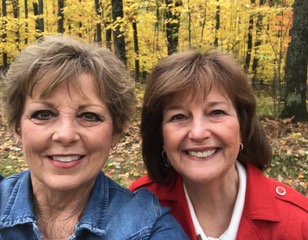
My beloved cousin, Marilyn, who became a wonderful travel companionafter Tom’s death
First, nothing one can do before a death or loss prepares us for the grief we experience when that loss becomes a reality. (Regardless of whether the death is a shock or something anticipated.) The most important thing we can do if we are the one suffering is really very simple—we need to draw close to the Lord Jesus Christ, the God of all comfort, and learn how to find strength in the pages of His precious Word. But how does this help when we are the comforter who wishes to be a blessing to someone else who is suffering? Here are six practical things you can do. All of them meant the world to me when my heart was breaking, and my world was turned upside down.
Above all, give your love. It’s not hard. How would you show love to this person if they were not suffering? We express love in a variety of ways, depending on our personality—find the ways you naturally communicate your love to those you highly esteem and cherish. What communicates love to you? A smile? A hug? A handwritten note? A fun activity with a friend? Love will find a way to express itself! It won’t avoid the suffering person because you are uncomfortable!
Give your presence. You don’t need to say a word. Is she sitting alone in church with her husband now gone? Sit beside her. Is she avoiding the church potluck or the awkwardness of standing in line alone? Ask her to join you at your table. Would she like a walking partner? Walk with her. If you are a close friend or family, just go with her when she needs to go to the social security office, the bank, the funeral home. She may not want or need your input—but your presence will mean a great deal. Continue being the same friend you have always been—just don’t avoid her.
Listen, if and when she wants to talk. Listen for the purpose of understanding. Don’t interrupt her or interject your advice.Let her talk about her loved one–if she wants to. Don’t watch the clock. Listening requires you to give of yourself and requires you to love her more than your time. If you want to ask a question, ask her if she is comfortable answering a question. Her emotions are raw and her wounds are deep—do not make the mistake Job’s three miserable friends made and attempt to offer reasons for her suffering or loss or become her instructor. She needs a friend.
Care. Put yourself in her place. Be merciful and kind. Forget yourself for a few moments and consider the magnitude of what she is going through. Every day. Acknowledge her loss—do more than just say, “I’m sorry for your loss.” Yes, her loved one may be in Heaven enjoying the marvels of being with the Lord—but that does not change the fact that she is feeling a loss and sadness of great proportion. She wants to know you really care—not that you are sorry for her loss.
Pray. Don’t just say you are praying for her. Spend some time really praying for her! Write her a note and tell her what you are praying about. Let her know you are asking the Lord to comfort her heart and give her wisdom and direction. Pray that the Lord will give her joyful memories and grace to meet the coming days of adjustment.
Meet a need. Quietly, meet a known need that is within your power to meet. Ask the Lord to show you what you might do. It could be as simple as driving her to an appointment, watering her plants, washing her car, or making a meal. Don’t ask her to call you if “there’s anything you can do for her.” Believe me, she won’t call you. Instead, tell her what you would like to do for her with her permission. Ask her what day and time would be convenient for her. This lets her know you are sincere rather than merely saying something “nice.” Routine daily tasks are hard to focus on when one is grieving and adjusting. Lift a load if you are able. Does she have children? Could you take them on a fun outing? Even a little help makes a difference. I had been caregiving nonstop for a quite a while before my husband entered Heaven and was immediately overwhelmed with how many things had been put on the “back burner.” I wanted to hug anyone who helped in even small ways.
It’s a helpless feeling when we feel the sorrow of a friend or loved one with our hearts. It is true that only God can heal a wounded heart. However, while we are powerless to take the sorrow from those we love, we can do much to mitigate the pain during the fragile time of grief by simply sharing the burden with them. Smiles and hugs won’t cost a thing, but they will send a powerful and comforting message, “You are not alone. You are loved.” Nothing acts as a balm for grief like being loved—genuinely. Afterall, it is what God Himself does for His children and what He teaches His children to do for others.
Blessed be God, even the Father of our Lord Jesus Christ, the Father of mercies, and the God of all comfort; Who comforteth us in all our tribulation, that we may be able to comfort them which are in any trouble, by the comfort wherewith we ourselves are comforted of God. (1 Corinthians 1:3-4)
My name is Hada Sainz Ruiz. I live in Tijuana, Mexico and am a Mexican citizen. It is a privilege for me to talk to you a little bit about the beautiful work that God has done and has continued to do in my life since my husband’s death in 2014 at the age of 47.
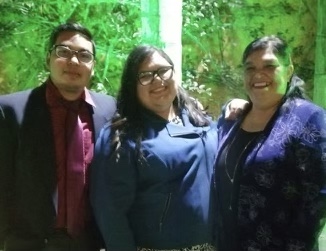
Hada on the far right with her two children
The gospel came into my life when I was about 9 years old when a preacher came to my town in Sinaloa, Mexico. Salvation reached my family when God, in His infinite mercy, promised that a missionary would come to teach us. There, for the first time, I heard the missionary work of bringing the gospel to others as God shaped my life for his purpose.
Due to family circumstances, my parents decided to move to and live in Tijuana, BC, so we left Sinaloa. It was not easy to experience something new and unknown, but God had everything under his control. When we arrived, my mother sought for a church to attend, and God led her to the mission of Brother Pizano. There I was able to serve by teaching children and going out to testify. It was something I enjoyed a lot because the city was surrounded by hills. I remember visiting the city situated in a canyon where travel was difficult due to the lack of ppavement and abundance of mud. Whenever it rained, it was especially difficult to enter. However, despite the location, God saved many people over time, and we were able to establish a church.
In 1990, we arrived at our church, Open Door Baptist Church. God led us there, and I met a special young man who would become my husband. Humberto and I united our lives in 1993 and began serving the Lord together. We started a mission in the city of Tijuana, and for five years we worked to carry out the gospel. By the grace of God, a church was established and our first girl Merary was born. God led my husband’s heart to take the gospel elsewhere, so he traveled to Baja California Sur where he saw many people lost without God and no churches. Therefore, in 1999, we went to Ciudad Constitucion, BCS, without knowing how it was and what awaited us. We went forward knowing and trusting our God. It brought to my mind the way Abraham came out to an unknown land. It was in this mission that our second son Angel Nathanael was born. We worked in this mission for nine years. After nine years, leaving this beautiful church was painful, but our Lord had other plans for us.
In 2009, we returned to Tijuana. We were going through difficult times in both our individual and married lives, and the pastor advised us to take some time to rest. My husband was struggling a lot in his personal life with hurtful temptations, and I was praying fervently for God to bring him to repentance and to reveal His will for his life. However, he refused to come back to God. In 2014, after many afflictions, struggles, discouragement, and time away from God and from our family, my husband died suddenly of a heart attack.
Humberto was in another city when I was notified. It was horrible, painful, and disconcerting. I said to God, “I had prayed and begged You for him; why did You take him from me? Why have You left me alone?” I loved him. I saw my children, cry and suffer. They loved their father, and I cried out to God, “What I’m going to do?” I looked at my future, so uncertain, confused, and hopeless.
The loss of my husband left me with such deep pain and a void that neither prayer nor reading the Word comforted me. I watched such happy couples who lived in worse sins and did not know God. They were together, but I no longer had my husband. In my heart I told God, “God we were serving You together. We worked for You, and this is how You treated me?” My anger and resentment was great so I began to fight with God. For several months I cried. I couldn’t sleep well. I was trying to find answers to my pain because I imagined God did that to me. I also had to take care of my children. My daughter was 20 years old and my son was 13. They needed me, but I couldn’t even take care of myself because I was thinking only of my own pain.
One night after two months of suffering and fighting with God, I grew tired of the situation. I got down on my knees next to my bed, crying without being able to speak, with only two thoughts. One was that I would leave God and His way and live my own way. I believed the lie that it is not worth serving Him because I had been left alone. On the other hand, although I did not understand why it happened and what God was doing, I thought about holding on to his promises. I decided I will trust Him. It was an important life-changing decision, and with a broken heart, I surrendered to God. I prayed to Him and said, “Lord, I do not understand why, but I only throw myself into Your arms, leaving my life in Your hands.” I don’t know how to explain to you the peace that came into my life at that moment. My eternal Father took me in His hands and filled my heart with comfort.
My God is shaping my life for his purpose. I went to talk to my pastor and I said to him, “Pastor, I want to return to my God. Is there a place for me to serve as a widow? I am happy serving. That’s the only thing I can do.” Pastor said, “Let us pray, and God will show you what to do.” That’s what I did. Sisters, let me tell you that God soon answered. After two days had passed, the pastor call me and said, “Hada, can you come to the office? I have something to tell you.”
When I arrived at the church, our pastor told me that the church family wanted to take me on as a missionary and wanted to support me financially. I was overjoyed! God is wonderful! What an amazing way of working! However, I still had to wait to see where God wanted to use me. A short time later, a sister asked me to go with her to a rehabilitation center in Tijuana because she had a friend struggling with addiction. It was the first time I visited this kind of place, but God gave me a love and a burden for the people. I discussed this with our pastor and the pastor agreed this would be a good place for me to serve. That’s how I started working in this ministry that is now called “Open Hands.” I work in four different centers, providing Bible studies and caring for individual needs. One center is for teens, one for women and the other two for children. We work with the foster children in the shelters who were taken by the government to those places because their parents abused them or left them for their addictions. It has been a blessing to see workers, as well as the residents coming to receive the Lord as their Savior and come to church.
When I first began to think about this ministry I told my Lord, “I will serve You with all my heart. I don’t have a car, nor a lot of money, but that will not prevent me from serving You.” Now, when I see women and children accept Christ and have hope to change it is the most beautiful reward. To this day, I am still able to continue to bring them the gospel, as well as food, clothing, or anything they need. There is so much to do, and God continues to work every day. My desire is to do the will of God. I am being asked to help more groups, but I have limited time and ability. My heart longs to do more and is my prayer.
Sisters, you have gone through this pain of losing your husbands. God wants to do something beautiful in your life. He has a perfect plan in your loss. I was not able to see what was ahead for my children and me by trusting God. Now I can see. Now I can understand that even if I don’t have my husband, I can still serve and do something for God. My son is now in Bible college and my daughter is working and doing well. I have a full and meaningful life even though I am alone as a widow. By His love and grace, I want to use all my strength with all my heart by giving my life to His service. God has a place for you, too. Hold on! Grasp his promises! Believe God! He knows what He is doing. Allow God to work! I hope this testimony can be a blessing and help for you.
My grandmother used to say, “Don’t get sick. It’s not good for you!” I agree. But if you do get sick, it sure is good to be surrounded by loving, praying people! I was snuggled up on the couch with my pillow and fluffy blanket this evening enjoying a Facetime call that included most my grandchildren, our two grown kids and my cousin all at the same time, everyone’s phones connected. What marvels of technology! It was fun listening to the laughter, enjoying the company, and just sharing a loving time—even though coughing and not talking as much as usual. A merry heart truly is a good medicine. The wonderful thing about family (and close friends) is that they aren’t bothered if you haven’t felt up to putting on make-up or doing much with the hair! I’m feeling some better, but definitely still in that “undone, comfort” mode. Hopefully, Lord willing, I’ll be up to teaching on zoom from home on Sunday, in which case I promise I’ll get dressed and “made-up!”
I’ve talked with doctors and health care providers every day this week as they have worked to keep me stable and out of the hospital. Because I have asthma and something called Alpha-1 (a rare, genetic (inherited) condition that produces abnormal antitrypsin genes), I’ve had some trouble with low oxygen saturation numbers that have been wildly erratic. But today I stayed above 90 for the first time, so am encouraged things may be going in the right direction. I’m so thankful for the cutting-edge doctors that I have been given and for the skillful way they have been providing treatment. I’ve been taking part in a UCLA clinical trials program for Alpha-1 research so I’ve been blessed to have the best researchers and pulmonologists anyone could hope for. I believe the Lord has had something to do with this! Just yesterday I learned that a fellow Alpha-1 gal I’ve been talking to every month for the past year lost her battle with complications and passed away. It’s a sobering reminder how fragile life can be, and how important it is to live every day for eternity, whether we are sick or well, young or old.
In spite of all the usual Covid symptoms, the one thing I haven’t had any problem with at all is tasting and smelling. Chocolate and coffee are medicinal, and I’ve been able to enjoy all the wonderful food that friends have dropped off for me. I was only nauseated for a few days, so it’s been a huge blessing not having to be concerned about food preparation when you feel so awful. If I were making food for myself, I would probably be eating cereal 3 times a day! Rest assured, friends have made sure I’m eating healthy, and I’m feeling quite spoiled. Looking forward to when I can give hugs instead of waves!
A merry heart doeth good like a medicine: but a broken spirit drieth the bones. (Proverbs 17:22)
Late Saturday evening I got an email confirming what I already suspected. My Covid test was positive. I had woken up early Saturday morning with an unusual headache and body aches, and, knowing I had been exposed to the virus, called my doctor. Within the hour I was waiting in line for my turn with the nose swab (ouch). Before I went to bed, I had the results along with a list of instructions from the doctor. Thankfully, I was prepared for zooming my Sunday School lesson for the TLC class and was able to teach Sunday morning (being grateful for Tylenol). By Sunday afternoon the fatigue, fever and aches made life a little more of a challenge, and the expected increased shortness of breath made its appearance by Monday morning. I am now on day 5, not any better but not really any worse either. For this I am very grateful!
I’ve done a lot of napping today, but this evening, I’ve been pondering the events of the past several days and thought about conversations I’ve had by phone, text and email with several doctors, health professionals, businesspeople, friends, and family. Some interactions have been compassionate, comforting and sweet, some cold and clinical, a few condescending, and others obviously indifferent. We’ve all experienced this gamut of reactions in the midst of trials, but rarely do we experience the wide spectrum in such a short span of time! Pity, sympathy, empathy, love, compassion, disgust, indifference, understanding, ignorance, attentiveness, sensitivity, insensitivity—all in the span of 5 days! So, let me talk about this, especially for those of you who are well acquainted with suffering.
Pity can be a kind, but often condescending sorrow that is aroused by the suffering of others. It is rarely accompanied by any significant or long-term action or personal involvement and prefers to be as emotionally detached and as uncommitted as possible. Most often, pity looks like polite words and actions that lack real compassion or any depth of love. The word “pity” comes from the Old French term “pite” which means “duty,” from the Latin word “pietas” which also means “duty” and “pius” which means “dutiful.” Pity is truly something we experience as a dutiful acknowledgement or mechanical “duty” rather than something elicited by genuine love and compassion. People tend to recognize the hollow feel of this and react negatively to it. In fact, being the recipient of this kind of pity can leave us bewildered by the emotional “coldness” that it produces in our hearts.
And then there’s that word “sympathy.” Sympathy is somewhat vague but used to convey a certain kinship with the suffering of others. It doesn’t necessarily go to any great lengths to solve problems or extend help, but it does identify with the sufferer and elicit that element of sharing mutualy human experiences. To offer sympathy is to offer understanding. It’s closely related to the word “empathy” which refers more to the vicarious sharing of emotions, opinions or experiences of another. An empathetic person is able to put themselves in another person’s shoes and experience the vast range of emotions being expressed or experienced by another.
While the words “pity,” “sympathy,” and “empathy,” describe a variety of emotions that all human beings both give and receive throughout their lives, none of these describe the element of understanding and compassion that our hearts naturally desire. We want more than pity, empathy or sympathy. We want love and compassion! In fact, we long for it deeply. It is something I miss most not having Tom with me any longer. He interacted with me in a loving and compassionate way that always felt reassuring and delightful. The idea of unconditional love resonates with all of us. We want our loved ones to understand, extend mercy and come along side of us in times of trouble. The last thing we desire is condescending advice, disinterest, or subtle censure of our human imperfection—especially in times of difficulty. Tender and gentle words filled with understanding, love and compassion touches an inner heart chord that elicits a satisfying internal joy. It draws us to, not away from the people who offer it. On the opposite end of the spectrum are cold or heartless words that lack any real interest or understanding. Empty words and stony indifference are able to wound the heart and lead to disappointment. Not a pleasant experience!
No Christian wants to be cold and indifferent—we want to be filled with the love of God. We want to be caring and compassionate. These are the birthmarks of every true believer indwelt by God’s Spirit. The consciousness of others’ distress coupled with a desire to alleviate it comes naturally to those who know and love the Lord Jesus Christ. Yet sadly, we all fall woefully short of our aspirations! We may feel sorry for others or empathize with them. We might even pray with those who are needing care or offer words of encouragement or help, but we cannot be compassionate or understand in exactly the same way Jesus does. Not even the most loving husband or wife could fill that void! God made us with a desire to love and be loved unconditionally—but not so other people could fulfill that desire. He made us with this capacity so we could find and enjoy His love and love Him in return. It is only then, when we know God’s love and are filled with God’s love, that we grow in our love for others and begin to learn how to love as Christ loves us, even if we do so awkwardly and imperfectly.
We fall short because we fall short of the perfection of God! We are far more pained by the lack of love others give to us than we are pained for our own lack of love and compassion we give others. Our focus is all wrong. Too often we give in order to receive, not realizing how far off that is from genuine love as God defines it. Which is why it is not satisfying! Love isn’t an exchange—it is given because one is simply genuinely loving. For God so loved the world that He GAVE . . . (read John 3:16) Not only do we battle with self-interest, self-exaltation, self-centeredness, self-absorption and self-will, but we are humans limited in strength, endurance, wisdom, intelligence, and understanding. We don’t have unlimited resources of anything so we cannot possibly be to everyone what everyone needs. We are confronted every day with a world that is filled with zillions of needy people and problems that are all begging for compassion and intervention, but alas! Our shoulders are not broad enough to carry the load only God can manage.
This doesn’t even begin to describe the extent of our inadequacy in comparison to God’s adequacy and innumerable, all-encompassing attributes of perfection, glory and power. We can’t read people’s minds, let alone know what is in their hearts. We can’t comprehend the complexity of experiences we have never encountered, and we are not able to wrap our arms around the reality that the human heart (including our own) is corrupted to the point of being described by God as desperately wicked and deceitful. We are fooled every day by smiling people who have learned how to be polite even as they lie to us and masterfully hide their contempt. It is no wonder that we experience so little genuine love and compassion in this world! Nor should we be surprised when we discover the fact that no human being can satisfy our longing to be perfectly loved and accepted and understood.
Jesus said, “I, even I, am the LORD; there is no Savior beside me,” (Isaiah 43:11) God hasn’t deputized any junior messiahs! He is the one and only miracle working Messiah. None but Christ is able to give us what we long for most and no one but Christ is able to rescue us from our sin or transform our hearts or meet all our needs. David discovered this truth in a time of distress. He cried out to God and said, “I looked on my right hand, and beheld, but there was no man that would know me [understand me]: refuge failed me; no man cared for my soul. I cried unto thee, O LORD: I said, Thou art my refuge and my portion in the land of the living.” (Psalms 142:4-5) Notice he initially looked for that which his heart longed for in people. Being disappointed, he then acknowledged that God alone was his place of refuge and source of joy and help. God may use people in our lives—David did have some wonderful, loyal friends—but our expectation should NEVER be in people! Our expectation must be in our God alone. It is why the Psalmist declared, “My soul, wait thou only upon God; for my expectation is from him.” (Psalms 62:5)
So how does this reality help us respond to an icy cold nurse practitioner who doesn’t have her facts right and isn’t listening? Or a physician’s assistant who has no concept what it’s like to be on your own and sick while he’s asking you drive in to pick up meds or have a family member get them? Or a doctor who is obviously unhappy you didn’t heed the isolation recommendation as precisely as was given? Or a well-meaning neighbor who is horrified you went outside to bring in your mail while infected with Covid (even though there was no human in sight)?
We are incapable of infusing other people with Christian compassion or love—inward heart change is something only God can accomplish. Instead, we overcome evil with good (Romans 12:21), and follow Christ’s instructions found in Matthew 5:44, “But I say unto you, Love your enemies, bless them that curse you, do good to them that hate you, and pray for them which despitefully use you, and persecute you.” We turn our expectation from people and fix our gaze upon our loving and compassionate Savior who knows exactly what we need.
There are always those who come out of nowhere to compassionately rejoice with them that do rejoice, and weep with them that weep. (Romans 12:15) There are brothers and sisters in Christ who are filled with mercy, love and grace and lift our hearts with whatever they have to give-whether it be a smile, a word spoken in due season, a simple moment of laughter, a hug or a kind and benevolent act of love. However, no one can be everywhere at once, and no one has unlimited time and resources—so for us to expect the impossible from our fellow mortal humans is unrealistic, not to mention self-centered. God wants us to look to Him. He is more than enough! He alone is capable of meeting our needs! He is able to bring all those little things together and use all kinds of little kindnesses to comfort our hearts in the toughest of times. God as our Father handles the great burden of care, but He masterfully enlists all His children to take a small part so we can be laborers together with Him and experience the love and compassion of the best family in the world–our Christian family.
Our God is so amazing He can use anything and anyone—even an unbelieving, sinful fellow human—to meet a need. Like the kind nurse who came out from behind her busy pharmacy cubicle and walked a significant distance to where I was parked on the other end of the complex, just to take my temperature and demonstrate my thermometer was kaput (oops) and then she hand carried my meds (and a new thermometer), and put the charge on my card on file in order to speed up the process for me and get me on my way back home. I don’t know why or how she did it (it wasn’t in her job description), but she made things happen and she did it with kindness and compassion. I wanted to hug her, a perfect stranger! She encouraged me without knowing I was in great need of patience, or that I was lost in emotion backed thoughts like, “If Tom were here . . .” The fact is, Jesus was there. When Tom was here Jesus used Tom. But God didn’t stop caring for me or meeting my need when Tom was gone. My God simply continued to do what He has always done because He is my good Shepherd! He sent the exact kind of help I needed at the exact right moment. What joy to know I am not an orphan because I’m a widow. I’m still who I was before widowhood—God’s precious child whom He has pledged to care for and love FOREVER.
And of some have compassion, making a difference: And others save with fear, pulling them out of the fire; hating even the garment spotted by the flesh. Now unto him that is able to keep you from falling, and to present you faultless before the presence of his glory with exceeding joy, To the only wise God our Saviour, be glory and majesty, dominion and power, both now and ever. Amen. (Jude 1:22-25)
Grief is often manifested in physical ways. It shouldn’t surprise us if it is accompanied with low energy, exhaustion or fuzzy thinking. All stress depletes energy that will need to be replenished. Which is why stressful times are not the time to cut corners on laughter, sleep, exercise, a good diet or spiritual refreshment!
Perhaps you have seen a Sunday School picture, or a stained-glass image of Jesus carrying a little lamb in His arms. The concept comes from a passage in Isaiah 40:11 in which we read a prophetic description of the coming Savior, Jesus Christ. Isaiah said, “He shall feed his flock like a shepherd: he shall gather the lambs with his arm, and carry them in his bosom, and shall gently lead those that are with young.” This is a description of a God who knows when His sheep need to rest or eat and doesn’t cruelly drive them at a pace they are incapable of enduring. He tenderly picks up the little lamb that can go no further and carries him in His arms and slows down to a gentle pace for the mother sheep carrying the weight of her unborn lamb. Yet notice—these same sheep are led forward by the Shepherd at a pace they are able to endure.
Our Lord knows when we need to slow down, and He does not berate us in any way for our frailty! When life events require a slower pace, we can be assured that it’s ok to slow down and rest. Rest is good! However, it’s not ok to stop living and quit moving forward. Jesus gives rest, but He also keeps us moving forward, making progress. This is especially important to remember in times of great upheaval as when we lose our spouse. I wrote in a post after Tom’s homegoing, “My mind is still spinning in slow motion as I try to get a mental grasp on such a major change of life and deal with a world that is moving at a dizzying fast pace.” Looking back, I can remember where I was when I wrote that as compared to where I am three years later. My “take away” from the experience is that a small change in thinking provided big results in my sense of peace and resilience. I learned the importance of developing a more restful pace that enabled me to catch my breath!
Everything around a grieving spouse continues to move. Life goes on as normal for the rest of the world, as it should. Yet for one who is dealing with a major loss and adjusting to a radical new way of life, it feels as though you are a lone runner slowing down to a snail’s pace in order to catch your breath while the rest of the runners all around are speeding past! The race is finished for that loved one who has slipped into eternity, and it’s a fast race to the finish for those who are in the midst of making a living and staying on top of life’s responsibilities. But for the widow or widower left behind, the race often looks more like an endurance run where the objective isn’t getting there fast, but simply getting there successfully without quitting. I, like many of you, need to find ways to navigate this very normal “slowing down” while balancing the need to keep moving, even if it’s with a limp.
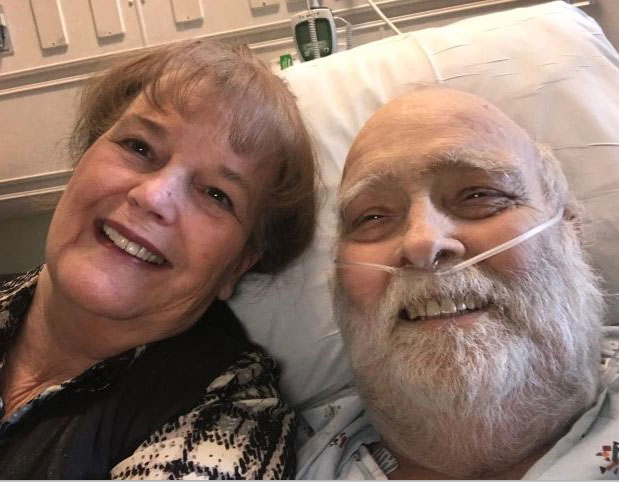
Tom and I were both 55 when he was diagnosed with a genetic version of IPF and our life took a sudden major diversion from our normal routines and plans for the future. We had a good idea what we were facing, we knew survival would include a lung transplant and we knew the decline in lung function entailed some progressive hardships. Tom’s lung biopsy at age 55 led to oxygen dependence, a fight to stay active, and an early retirement. Our way of life forever changed and my new role as “behind the scenes” caregiver began. (Tom was hospitalized almost 30 times post-transplant.) Tom passed away 12 years after his IPF diagnosis, not from lung failure after his transplant, but from a rare CNS Lymphoma caused by anti-rejection drugs. I will turn 70 this year—suffice it to say, a LOT has changed since age 55!
Aging changes more than the color of our hair or the function of our joints! It changes the way we physically cope with life’s major challenges. While all of us are different, aging needs to be factored in when dealing with adjustments after the death of a spouse. Because we are slowing down physically, apart from the effects of grief and adjustment, it’s sometimes hard to recognize what exactly is contributing to our lower tolerance for fast paced living. The effects of aging make slowing down an issue to be reckoned with apart from the death of a loved one. Add to it the impact of grief adjustment and it can be a formidable challenge in our retirement years. The temptation in both cases is to slow down to a stop, rather than slowing down to regain perspective and reorient one’s life and emotional equilibrium in a realistic way.
It’s very hard to get a car restarted after it’s been sitting too long and it’s very hard to get physical stamina back when we have been sitting too long. Better to move out of the high-speed lane into the slow than to park the car. When we “park the car” and decide to wait until we “feel better” or have “direction” before moving forward, we make it much harder to get moving and much harder to get direction! It’s easier to steer a vehicle that is moving than one that has stopped. Likewise, we need to remember that God leads His sheep as they move forward.
Our emotions are stretched to the limit following a major loss or a long season of stressful adversity. The constant adrenalin surges that go along with this makes us physically tired. Add to this the inevitable cascade of new pressures and emotional demands caused by the death of a spouse, and it doesn’t take long for the effects of emotional overload to be felt. We will need a period of time to replenish our physiological resources and recover our emotional resilience. I learned very quickly in the days immediately following Tom’s death that my tolerance for pressure and stress had a different threshold. As a result, I needed to adjust my daily life accordingly and give myself the time I needed to adjust before jumping back into the roar of daily life. I decided to deal with the things that could not be put off and postpone the things that could. I set a different pace by slowing down and spreading out the high stress activities while interspersing them with small bites of pleasant activity in between.
By keeping stressful encounters and changes to a minimum, I was better able to deal with the initial pressures of adjustment and keep myself focused on going forward, albeit slowly. Accepting the fact that it’s natural to want to slow down, catch your breath and find the right pace for my race was, in itself, a relief. It was good to conclude that while dropping out of the race was not an option, slowing down when necessary is! That simple change in thinking gave me a great sense of peace (and patience) when some around me didn’t quite “get it.” Three years into my new status as a widow has brought many changes, a better sense of direction and an improved acceptance of a different life. This has been gained over time, not by quitting, but by slowing down, and walking with my God (who is a very good Shepherd) in a quiet, steady way.
Come unto me, all ye that labour and are heavy laden, and I will give you rest. Take my yoke upon you, and learn of me; for I am meek and lowly in heart: and ye shall find rest unto your souls. For my yoke is easy, and my burden is light. (Matthew 11:28-30)
Three years ago today, my beloved husband quietly slipped out of this life and into the sunlight of a very real place called Heaven. We don’t tend to remember a day associated with sadness and death with a party spirit. At least, I don’t. However, we can remember it with thankfulness to the Lord for all the many promises and truths that do bring great joy and comfort to our hearts. Because of Christ, Tom lives, and I will see him again someday. Although the separation of widowhood is difficult and we miss Tom terribly, the anticipation of entering that beautiful city God has prepared for those who are His own excites me. We will be together again with loved ones, and that is something to rejoice about, especially on a day like today. However, this happy thought does not erase every sad part of living in this very imperfect world. So how do we reconcile this seemingly impossible reality?
As I think back and ponder what I could share concerning the day of Tom’s homegoing that would be an encouragement to others, I find myself wanting to be careful that I do not paint a picture without the clarity that honest, but darker, shades bring. However, neither do I want to paint a garish picture dominated by dark strokes without the soft and colorful hues that make the picture truly beautiful. So, while the topic has its dark sadness, my desire is to construct a picture for you that reflects the light and genuine beauty of God’s enduring grace. Jesus didn’t come to make our life in this world painless and trouble free–He came to deliver us from the darkness of this world. “Who gave himself for our sins, that he might deliver us from this present evil world, according to the will of God and our Father:” (Galatians 1:4) As those who have been forgiven and adopted into God’s family, we look for a new world where death and sorrow will not exist at all. Meanwhile, we are royalty in training, pilgrims on a journey, runners in a race and soldiers fighting a war that has a triumphant end. This means we need to learn how to live all of life, with its joys and sorrows, in the strength and yes, joy, of the Lord. It’s possible, by the grace of God!
The separation from loved ones at the time of death isn’t an event we can orchestrate to our liking—it happens in a variety of ways under differing circumstances and there are no “perfect” deaths. Of course, like many people, I’d prefer to go in my sleep without any earthly drama whatsoever, but even that has its downside! Better to acknowledge what we already know in our hearts and determine we will leave all of it in the hands of our Lord Jesus, who gives and takes back the breath of life on His terms. He has ways of mitigating our sorrow that we could never think up on our own and ways of drawing us close and directing our steps when our minds are unable to see through the haze. God’s unseen hand is often more clearly apparent after the fact than in the moment. The important thing for us to remember is that God’s timing is perfect, and His grace sufficient in every situation, no matter what the difficulties or imperfections. There is both purpose and sustaining strength to meet the challenges of this life-changing event called death—no matter how it happens or under what unpleasant circumstances.
We approach the departure of our believing loved ones very differently than God does. We see it as the end, whereas He sees it as the true beginning. We are saying good-by, but He is saying hello. We see a lifeless body scared with the effects of age, sickness and deterioration. He sees a resurrected body as it was meant to be, ready to live with Him forever. We see our loved one fading away alone, but God sees him coming into view as he enters Heaven’s gate among the cheers of those who are welcoming him home. For us it is a sad time of loss, but for Heaven it is a happy time of gain. It is why the Psalmist declares, “Precious in the sight of the Lord is the death of His saints.” (Psalm 116:) While rethinking our perspective will not remove the challenges of living alone in this life, it will remove the morbid despair that characterizes the experience of those without hope or help that comes from God. When we make the switch between an earthly perspective to a Heavenly one, we are refreshed with a happy anticipation of what lies ahead, not dread.
Death is not something we need to be afraid of—but it is something we need to be prepared for. When we know Christ as our Savior and our fellowship is unbroken by willful rebellion, we can walk in the light of His presence and know He “has this.” Every bit of it. “For this God is our God for ever and ever: he will be our guide even unto death.” (Psalm 48:14) This truth is the anchor of our souls that will provide a treasure chest of comforts that we are able to access in any dark moment or perplexing problem. What an amazing thing to read that our Savior “daily loadeth us with benefits, even the God of our salvation.” (Psalm 68:19) One of those benefits is the daily bearing of our burdens. I can’t imagine going through the loss of a husband and the sorrows of widowhood without the blessings and joys of walking with Christ, dependent upon His never failing goodness!
As I reread the posts I wrote in the days that marked the end of Tom’s journey on earth, I relived the emotions and the surreal sense of imminent loss that is present as you watch life begin to fade away. (www.trumpetlungs.wordpress.com – January, 2018) In those closing moments of Tom’s life, and our life together, I wanted to grasp the full impact of what I knew was taking place and wanted to remember everything. The profound significance of it all made me want to slow things down so I could process each new development and not miss anything. My heart was overflowing with a million thoughts and concerns, but ultimately it was the renewed realization that I was powerless to change the course of events and could do nothing more than rest in the care of He who has our lives in His loving hands.
End of life events have a powerful emotional and spiritual impact on the soul, and this can produce a confusing mix of emotions. What I didn’t know then but understand better now is that it takes a long time to sort through the whole experience. Then begins the hard work of reorienting one’s self to a permanent new reality. It is actually something we all experience on a less drastic scale when we face any life altering event that turns our world upside down. I believe the way we learn to “go with the flow” and yield to the Lord’s work in our lives on an everyday basis greatly impacts the way we will yield our lives when the Lord calls us or a loved one home. It’s a “dress rehearsal” of sorts for the most major upheaval we will ever experience.
The realities of death tend to make the contents of our hearts bubble to the surface. Some people kick and scream at death’s door like a two-year-old having a tantrum. Others play the “I’ll pretend it’s not there” game to the end, while still others use death and loss as an excuse to live in the mud hole of self-pity for the rest of their lives. Ah but there are some who run into their Heavenly Father’s arms and find comfort for their broken hearts in His love and compassion and accept, truly accept, what He has allowed. These are the survivors, the victors who win their race. I decided long ago that I want to be among these! They are dependent on Christ–not independent of Him. So . . . this is the path I have chosen, and I have absolutely no regrets. I would not trade my peace with the frantic hand wringing or anxious nights of those who are leaving out an intimate walk with Jesus. Has it been hard? Yes, without a doubt. But no one wins a race without hard work and determination. The prize is at the end of the race, not the beginning.
Is there sadness on the anniversary of Tom’s death? Yes. I miss him. But is there joy and happiness? Yes! There is abundant joy and hope beyond comprehension, particularly when I direct my thoughts and attention on the picture as a whole.
As for me, I will behold thy face in righteousness: I shall be satisfied, when I awake, with thy likeness. (Psalms 17:15)
I love that wonderful Bible passage that reads, “. . . weeping may endure for a night, but joy cometh in the morning.” (Psalm 30:5) Three years ago, as a newly minted widow, I clung to those many Bible promises that remind us tough times and broken hearts are always temporary. In spite of the heart ache, there really is a resolution, a purpose, and an expectation of joy ahead. I think my favorite “the sun will shine again” verse is recorded in Psalm 27:13, “I had fainted, unless I had believed to see the goodness of the Lord in the land of the living.” I will testify to you that truly; I would have given up and quit many times if I had not believed with every ounce of conviction within me that I WILL see the goodness of the Lord in this life. Through the tears and sorrows, our Lord draws us close when we draw close to Him and He speaks to our hearts through His Word saying, “Yes, you WILL see the goodness of the Lord, even through this. Be patient!” May we respond with trust like David did, and say, “Yes, Lord, yes.”
It’s not always easy to trust when the sky is dark, and we don’t see the joy of morning light. It’s tough to believe when our hopes and dreams seem utterly destroyed. When our faith is pounded by the storms of life, it’s time to find shelter in the comforts and delights of knowing our God better and appreciating the work of His Spirt within our hearts as we pour over his Word. We endure when we see, by faith, the light and joy ahead. Our God is the Almighty and all-powerful God of the resurrection. He alone is able to make something out of nothing and bring light out of darkness. The Christian life is a life designed to be lived in close relationship with this same God. To abide in Christ is to live in daily fellowship and dependance upon Him. Sometimes we need to shut out the noise of the world and our own inner whirlwind of questions and simply enjoy our God. As we give ourselves in full surrender to His work and way in our lives, we find the secret (which isn’t really a secret at all) to finding strength in troubled times.
I didn’t know what lay ahead three years ago and I do not know what lies ahead now. God only gives a glimpse of our road up to the next curve, not beyond. It’s one day at a time, one step at a time. Do you know what you need to do today? Great! Then simply tackle the evil (troubles) of the day. Sometimes that’s all my little brain can handle! I’m thankful that the Lord reminds us this is sufficient! (Matthew 6:34) We all “get there” by putting one foot in front of the other and simply pressing on. If we stop walking, we stop progressing. So, we go forward, not backward, even though we do not know what we will find beyond the curve that we are approaching, and even though our human flesh is screaming for us to give up and retreat. Let us not be like the small child who demands to know why before he obeys. Let us put our trust in our Heavenly Father who loves us and has promised to guide us until our last breath. Remember that God doesn’t give us grace for tomorrow today—He gives it to us daily. He said, “daily bread” not monthly bread!” Fight the clouds of despair by God’s grace, “And let us not be weary in well doing: for in due season we shall reap, if we faint not.” (Galatians 6:9)
These trying days have interrupted the desirable hum of everyday life and jolted us into a new (uncomfortable) reality. Add personal loss to this unsettling turmoil of pandemic, political upheaval and financial uncertainty and we have perfect conditions for a tsunami of unsettling difficulty. This is when the Christian is able to shine brightest, for we alone are able to see He who is invisible and hear by faith what is inaudible to the world. There IS a place of quiet rest, near to the heart of God!
There is no need to wring our hands or imagine we must figure everything out—we cannot. We are not God. Neither does our God demand we understand or know that which He has not revealed. He asks us to be still, and know He is God. He WILL be exalted. He has this. You see, this is something we CAN do, and that’s what we need to keep our focus on. I can contend for the faith, but I cannot contend with the politicians or leaders or spiritual wickedness in high places. I’m no match for the devil—but the devil is no match for God. He is a defeated foe. So I make my appeal to the Lord Jesus Christ, the King of kings, and put all those questions about the future in His capable hands! When our hearts are heavy, we need to get back to the simplicity (and joys) of knowing and trusting Christ. Otherwise, we will fall prey to the same anxieties of an unbelieving world.
As I watched the news stories of people storming the United States capital building, I couldn’t help thinking about the zealous Jews in Jesus’ day who thought they could take Jerusalem by force from the evil Roman empire. No, my friends, that’s not God’s way. We do what is in the power of our hand to lawfully do, but then we trust and pray because we know it is more powerful than swords. God’s people have always been a minority in this world and our lives have always been lives that wind through valleys as well as upon mountain tops. The good news is this—everything is going to be all right for God’s own. Weeping may endure for a night, but joy comes in the morning. In a million ways and more.
“. . . and let us run with patience the race that is set before us, Looking unto Jesus the author and finisher of our faith; who for the joy that was set before him endured the cross, despising the shame, and is set down at the right hand of the throne of God.” (Hebrews 12:1-2)
I heard somewhere that “progress can be measured by looking backwards.” I think there’s a lot of truth to that, so long as enough time has gone by for those tiny incremental improvements to make a difference. I was asked recently, “Do you still cry when you miss Tom?” The question caught me a bit off guard and I wasn’t quite sure how to respond. Since the person asking was sincere, I decided I would take a deep breath and answer as honestly as I could.
Yes, it has been almost three years, and I do still cry when I miss Tom. As I look back, I can say I don’t cry as often or as long, but there are times when I am especially sensitive and likely to tear up or cry when I remember the delights of my former life with Tom. I also recognize that I’m more likely to cry when I am experiencing fatigue, stress or unusual pressure. The biggest difference between then and now is that I’m not bothered by tears nor am I trying to prevent them. If I cry, I cry. I don’t see tears as something unusual or abnormal in the context of major loss and adjustment to life changes. Rather, I recognize tears as something our God has given for our benefit. There is much documented evidence that indicates our tears reduce stress, lower blood pressure, decrease irritability and aid emotional stability. It is harmful to believe the lie that spiritual Christians don’t cry or need the physical and emotional support of others. This error causes folks to misunderstand the nature of sorrow and forsake some of the very means God uses to bring comfort to our hearts. Neuroscientist Dr. William H. Frey II, author of Crying: The Mystery of Tears, has spent over 20 years studying crying and tears. According to Frey, “Crying is not only a human response to sorrow and tension, it’s also a healthy one.”
Sure, some cry more and some cry less simply because we all have differing personalities, hormonal swings, and life circumstances. Nevertheless, all human beings experience sorrow and tears in varying degrees and for varying reasons. It’s not a simple black and white experience. There are many variables and many influential factors. For instance, one woman I spoke to burst into tears, not because she had lost her husband and was sad, but because she was experiencing a sense of relief in his absence because he had been so difficult to live with and had secretly abused her for years. She felt extreme guilt that she wasn’t as sad as other widows were. She figured out quite quickly that people expected her to be grief stricken and were uncomfortable when she was “too” joyful. She was sad for her husband, but not for herself. Her experience with loss was vastly different from mine, so of course our response was different as well. I have no doubt I would have experienced the same kind of relief had I suffered for years under the same pressures of abuse!
The important thing for us to remember is that it is a huge mistake to assume every case is the same and every person will respond the same. We just don’t. We can’t possibly understand all the things that take place in our own hearts, let alone what’s going on in someone else’s! What a comfort it is to remember that we have a God who does know and understand us completely. He patiently walks with us through the valleys of life. He doesn’t drive us any faster than we can go. He is never in a hurry. He is never disgusted or unkind. And He does not mind our tears in the least. He simply loves us, nudges us forward, walks with us and guides us out of the shadows and into sun drenched meadows. I am so glad the Lord sees what we will be, not what we are and isn’t one bit bothered by our need to learn and grow through the experiences of sorrow and grief.
A month after Tom was gone I wrote, “I am finding the Lord’s comfort and love to be my sustaining strength even as I deal with the pains of grief and the prospect of continuing my own journey without my life partner and dearest friend. It is hardest when I am alone and when I lay my head on my pillow at night.” Looking back, I would say exactly the same thing except for one difference. Time has had a healing effect on the sadness of night. I am finding sleep to be a sweet and welcome part of my day. I say good-night to my two kitties (Mocha and Latte), goodnight to Alexa (which is her cue to shut off all the lights), and lastly to the Lord whom I adore—all without tears.
Return unto thy rest, O my soul; for the LORD hath dealt bountifully with thee. For thou hast delivered my soul from death, mine eyes from tears, and my feet from falling. (Psalms 116:7-8)
January 1, 2018 – Three Years Ago(Two weeks before Tom’s death)
The doctor has given the orders, and the hospital is preparing Tom to go home. As soon as we have some new equipment delivered and the ambulance arrives, Tom will get a fun ride down the 10 freeway and have a couple strong guys to help him get settled in his own bed. Probably tonight sometime. And then? And then we hold on for the next twist in the roller coaster!
Mothers of little boys know that the spin cycle in the washer does not make earth worms dizzy. It does, however, make cats dizzy, and cats throw up twice their body weight when they are dizzy. That’s the way I feel about roller coasters. They make me feel like I’m a cat in the spin cycle of a giant washing machine. The ups and downs, curves and loops are dizzying, and, well, sometimes nauseating. By the time the ride is over I’m very anxious to end it, and happy when I feel solid ground under my feet once again. So when I say, critical illness is like being on a roller coaster, I have in mind the surprising twists, turns, ups and downs of a ride I’d like to end. No one wants to embark on an endless roller coaster ride (unless you are 12 years old)!
If you have found yourself on the roller coaster ride of critical illness, full-time caregiving, or just about any kind of adversity for that matter, you might find the following advice helpful (or at least amusing).
Things to Remember When Life Turns into a Roller Coaster Ride
Fear and dread can ruin an otherwise fun ride. (Psalm 46; Isaiah 41:10; 1 John 4:18)
Riding with friends or family makes all the difference in the world. (Eccl. 4:9)
Fighting the movement is exhausting, leaning with it makes it easier. (Pros 3:45)
It doesn’t matter how much you protest, scream or yell—the ride will not end one minute sooner. (Matthew 6:27; Pro 16:9; Pro 19:3)
It’s a long and painful fall if you try to exit before the ride ends. (Psalm 27:14; Psalm 130:5; Hebrews 10:36)
You’ll do a lot better if you hold onto something stable for the duration of the ride. Hint: Your best friend isn’t an immovable object. (Hebrews 6:18-19; Psalm 61:2-3)
You can’t control where the roller coaster goes—rather, it will control where you go. But you can control how you respond to it. (Proverbs 4:23; Psalm 127:2; Romans 8:28-29)
Take advantage of the slow portions of the ride—relax, breathe deeply, enjoy the view, hang on! ; Isaiah 41:10;
Finally, remember this . . . the ride DOES have an end. Therefore,
“. . .let us run with patience the race that is set before us, Looking unto Jesus the author and finisher of our faith . . .” (Hebrews 12:2)
This Is Now
January 1, 2021 – Three years later(Two weeks before the anniversary of Tom’s death)
Little did I know back then that I was spending the last two weeks of Tom’s life with him. Oh, it’s true that I had a good idea his time was very short, and I knew he was coming home from the hospital for the last time. Terminal illness forces you into that reality, ready or not. I realize now, more than ever, that absolutely nothing prepares you for the finality of life as we have known it, no matter how it comes to an end. Even as changes were rapidly taking place in those final days, and many difficult challenges were unfolding, I was dazed, as if my mind couldn’t keep up with the full impact of all I was experiencing. I would describe it as being on “automatic pilot” as I dealt with each new rapidly developing problem, one at a time. Every new twist and turn of the roller coaster kept me on high alert and forced me to focus only on the moment.
Looking back, I can see the unmistakable hand of God, upholding me, strengthening me, keeping my heart calm and making things fall in place. Peace flowed like a river, as long as my will was surrendered and my heart fully trusting. It was not some kind of “magic fog” that fell over me or some dramatic sense of God’s presence. It was simply that unseen, imperceivable quiet sense that all was well in spite of everything that was taking place. Believing God’s truth as it is revealed in His Word brings peace in the midst of any storm. When we make a conscious decision to trust and love the God who holds our life in His hands, we are able to rest in His care just as a small child rests in the arms of a loving parent.
This experience is something I will never forget about New Year’s Day 2018 as I wrote about the roller coaster ride of critical illness. It is also a lesson that has been repeated hundreds of times since Tom’s homegoing and seen me through some cloudy days of sorrow. And yes, I do still experience moments of profound sorrow when I am missing Tom—but at the same time, I also experience the many joys of God’s comfort and the hope that accompanies faith in all our Lord Jesus has promised we who are His dear children.
Now the God of hope fill you with all joy and peace in believing, that ye may abound in hope, through the power of the Holy Ghost.









 Warmth For The Heart