
Grief is often manifested in physical ways. It shouldn’t surprise us if it is accompanied with low energy, exhaustion or fuzzy thinking. All stress depletes energy that will need to be replenished. Which is why stressful times are not the time to cut corners on laughter, sleep, exercise, a good diet or spiritual refreshment!
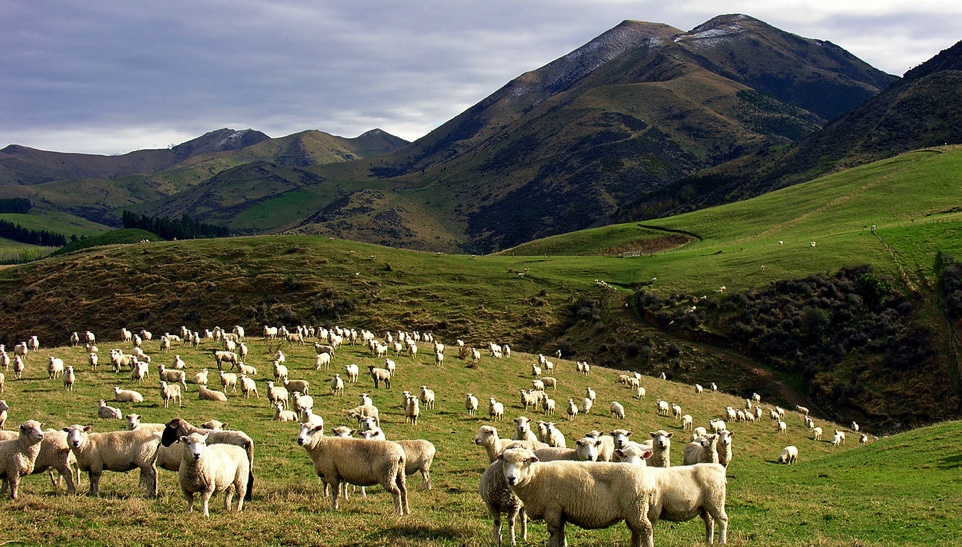
Perhaps you have seen a Sunday School picture, or a stained-glass image of Jesus carrying a little lamb in His arms. The concept comes from a passage in Isaiah 40:11 in which we read a prophetic description of the coming Savior, Jesus Christ. Isaiah said, “He shall feed his flock like a shepherd: he shall gather the lambs with his arm, and carry them in his bosom, and shall gently lead those that are with young.” This is a description of a God who knows when His sheep need to rest or eat and doesn’t cruelly drive them at a pace they are incapable of enduring. He tenderly picks up the little lamb that can go no further and carries him in His arms and slows down to a gentle pace for the mother sheep carrying the weight of her unborn lamb. Yet notice—these same sheep are led forward by the Shepherd at a pace they are able to endure.
Our Lord knows when we need to slow down, and He does not berate us in any way for our frailty! When life events require a slower pace, we can be assured that it’s ok to slow down and rest. Rest is good! However, it’s not ok to stop living and quit moving forward. Jesus gives rest, but He also keeps us moving forward, making progress. This is especially important to remember in times of great upheaval as when we lose our spouse. I wrote in a post after Tom’s homegoing, “My mind is still spinning in slow motion as I try to get a mental grasp on such a major change of life and deal with a world that is moving at a dizzying fast pace.” Looking back, I can remember where I was when I wrote that as compared to where I am three years later. My “take away” from the experience is that a small change in thinking provided big results in my sense of peace and resilience. I learned the importance of developing a more restful pace that enabled me to catch my breath!
Everything around a grieving spouse continues to move. Life goes on as normal for the rest of the world, as it should. Yet for one who is dealing with a major loss and adjusting to a radical new way of life, it feels as though you are a lone runner slowing down to a snail’s pace in order to catch your breath while the rest of the runners all around are speeding past! The race is finished for that loved one who has slipped into eternity, and it’s a fast race to the finish for those who are in the midst of making a living and staying on top of life’s responsibilities. But for the widow or widower left behind, the race often looks more like an endurance run where the objective isn’t getting there fast, but simply getting there successfully without quitting. I, like many of you, need to find ways to navigate this very normal “slowing down” while balancing the need to keep moving, even if it’s with a limp.
Tom and I were both 55 when he was diagnosed with a genetic version of IPF and our life took a sudden major diversion from our normal routines and plans for the future. We had a good idea what we were facing, we knew survival would include a lung transplant and we knew the decline in lung function entailed some progressive hardships. Tom’s lung biopsy at age 55 led to oxygen dependence, a fight to stay active, and an early retirement. Our way of life forever changed and my new role as “behind the scenes” caregiver began. (Tom was hospitalized almost 30 times post-transplant.) Tom passed away 12 years after his IPF diagnosis, not from lung failure after his transplant, but from a rare CNS Lymphoma caused by anti-rejection drugs. I will turn 70 this year—suffice it to say, a LOT has changed since age 55!
Aging changes more than the color of our hair or the function of our joints! It changes the way we physically cope with life’s major challenges. While all of us are different, aging needs to be factored in when dealing with adjustments after the death of a spouse. Because we are slowing down physically, apart from the effects of grief and adjustment, it’s sometimes hard to recognize what exactly is contributing to our lower tolerance for fast paced living. The effects of aging make slowing down an issue to be reckoned with apart from the death of a loved one. Add to it the impact of grief adjustment and it can be a formidable challenge in our retirement years. The temptation in both cases is to slow down to a stop, rather than slowing down to regain perspective and reorient one’s life and emotional equilibrium in a realistic way.
It’s very hard to get a car restarted after it’s been sitting too long and it’s very hard to get physical stamina back when we have been sitting too long. Better to move out of the high-speed lane into the slow than to park the car. When we “park the car” and decide to wait until we “feel better” or have “direction” before moving forward, we make it much harder to get moving and much harder to get direction! It’s easier to steer a vehicle that is moving than one that has stopped. Likewise, we need to remember that God leads His sheep as they move forward.
Our emotions are stretched to the limit following a major loss or a long season of stressful adversity. The constant adrenalin surges that go along with this makes us physically tired. Add to this the inevitable cascade of new pressures and emotional demands caused by the death of a spouse, and it doesn’t take long for the effects of emotional overload to be felt. We will need a period of time to replenish our physiological resources and recover our emotional resilience. I learned very quickly in the days immediately following Tom’s death that my tolerance for pressure and stress had a different threshold. As a result, I needed to adjust my daily life accordingly and give myself the time I needed to adjust before jumping back into the roar of daily life. I decided to deal with the things that could not be put off and postpone the things that could. I set a different pace by slowing down and spreading out the high stress activities while interspersing them with small bites of pleasant activity in between.
By keeping stressful encounters and changes to a minimum, I was better able to deal with the initial pressures of adjustment and keep myself focused on going forward, albeit slowly. Accepting the fact that it’s natural to want to slow down, catch your breath and find the right pace for my race was, in itself, a relief. It was good to conclude that while dropping out of the race was not an option, slowing down when necessary is! That simple change in thinking gave me a great sense of peace (and patience) when some around me didn’t quite “get it.” Three years into my new status as a widow has brought many changes, a better sense of direction and an improved acceptance of a different life. This has been gained over time, not by quitting, but by slowing down, and walking with my God (who is a very good Shepherd) in a quiet, steady way.
Come unto me, all ye that labour and are heavy laden, and I will give you rest. Take my yoke upon you, and learn of me; for I am meek and lowly in heart: and ye shall find rest unto your souls. For my yoke is easy, and my burden is light. (Matthew 11:28-30)
 Warmth For The Heart
Leave a comment